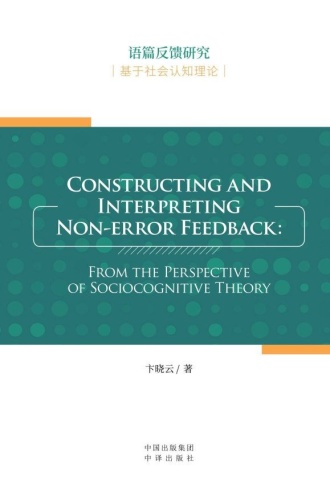
语篇反馈研究:基于社会认知理论(英文版)
¥49.00
作品简介
本书详述了一项关于中国外语教师语篇反馈的历时个案研究,揭示出在中国外语教学环境下针对大学生的英语说明文,教师构建语篇反馈、学生加工语篇反馈时,他们的决策过程符合社会认知理论提出的“身心世界”一体原则。在反馈过程中,教师、学生、情境之间的复杂动态交互也有助于学生作为写作者和反馈接收者在认知、情感、行为等方面实现发展。本书将为外语写作教师、反馈领域的研究者、计算机反馈开发者提供反馈实践、研究和开发方面的启示。
卞晓云,任教于中央财经大学外国语学院,新西兰奥克兰理工大学应用语言学方向博士。目前主要研究兴趣和研究方向:外语写作教学、教学法、教师认知、教师发展。
作品目录
作者简介
Chapter 1 Introduction
1.0 Introduction: An Overview
1.1 Problem Statement
1.2 The Rationales Behind the Study
1.3 Overview of Research Methodology
1.4 Significance of the Study
1.5 Organization of the Book
Chapter 2 Issues in Teacher Feedback
2.0 Introduction
2.1 Development of Teacher Feedback: Questions
2.2 Theoretical Perspectives on Teacher Feedback and Its Importance
2.3 Research on Teacher Feedback
2.4 Research Gaps and Emergent Issues
2.5 Chapter Summary
Chapter 3 Research Design
3.0 Introduction
3.1 Research Design: The Rationale
3.2 Research Design: Defining the Term “Case Study”
3.3 Research Design: Key Issues
3.4 Chapter Summary
Chapter 4 The Construction of Non-error Feedback
4.0 Introduction
4.1 What the Teacher Brought to the Feedback Process:Contextual Information
4.2 The Entire Feedback-Constructing Process the Teacher Went Through: Contextual Information
4.3 The EA Issues the Teacher Actually Focused on
4.4 Teacher Decision-Making: How the Teacher Decided Which EA Issues to Focus on
4.5 The Feedback Delivery Approaches the Teacher Used
4.6 Teacher Decision-Making: How the Teacher Decided on Feedback Delivery Approaches
4.7 Chapter Summary
Chapter 5 The Interpretation of Non-error Feedback
5.0 Introduction
5.1 What the Students Brought to the Feedback Process:Contextual Information
5.2 Student A's Acceptance and Incorporation of EA Feedback
5.3 Student B's Acceptance and Incorporation of EA Feedback
5.4 Student C's Acceptance and Incorporation of EA Feedback
5.5 How the Students' Acceptance and Incorporation of EA Feedback were Decided
5.6 Chapter Summary
Chapter 6 The Feedback Process:Its Effectiveness and Helpfulness
6.0 Introduction
6.1 Effectiveness of the Feedback Process
6.2 Helpfulness of the Feedback Process: Student Changes
6.3 More Helpfulness of Non-error Feedback
6.4 Chapter Summary
6.5 Summary of All Findings
Chapter 7 Discussion and Conclusion
7.0 Introduction
7.1 Aims and Methodology of the Study
7.2 Summary of Key Findings
7.3 Contributions of the Findings
7.4 Limitations and Future/Further Research
7.5 Final Remarks
References
Appendices
Appendix A: Teacher Background Interview Guide
Appendix B: Student Background Interview Guide
Appendix C: Think-Aloud Protocol in the Training Session
Appendix D: Teacher Retrospective and Ongoing Interviews Guide
Appendix E: Student Retrospective and Ongoing Interviews Guide
Appendix F: Teacher/Student Final Interview Guide
Appendix G: Teacher Think-Aloud Data Codebook
Appendix H: Student Think-Aloud Data Codebook
Appendix I: Student Writing with Teacher Comments
Appendix J: Student Writing with Teacher Comments and Student-Written Notes
Appendix K: Writing Prompts
内容简介