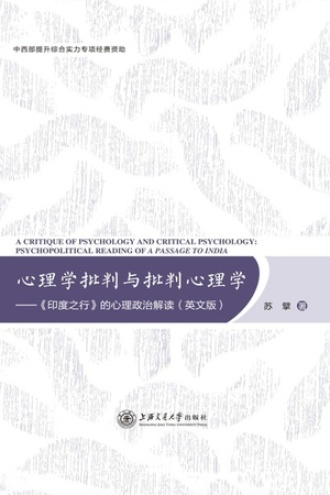
心理学批判与批判心理学:《印度之行》的心理政治解读(英文版)
A critique of psychology and critical psychology: psychopolitical reading of a passage to India
¥19.99
作品简介
本著作梳理了从心理学角度对于福斯特名著《印度之行》进行阐释的五个典型文本,并对其存在的问题进行批判,旨在找出精神分析与分析心理学这两大心理批评理论所存在的问题,进而延伸到对整个西方主流资产阶级心理学的批判,最终将批判心理学(尤其是克劳兹·霍茨坎普创立的德国批判心理学)建构为新的文学理论范式,并将心理政治解读确立为新的文学批评方法,并将其运用于对《印度之行》的批评实践中,从种族与性属的角度对具体文本进行解读。
苏擘著。
作品目录
内容提要
前言
Chapter 1 Introduction
1.1 Passage Criticism in the West
1.1.1 The Early Comments in 1924
1.1.2 Political and Postcolonial Perspectives
1.1.3 Liberal-humanistic and Biographical Perspective
1.1.4 Feminist Perspective
1.1.5 Psychological Perspective
1.1.6 Aesthetic, Technical, Structural and Linguistic Perspectives
1.1.7 Other Perspectives
1.2 Passage Criticism in China
1.3 Theoretical Framework of the Book
1.3.1 Origin
1.3.2 Aim
1.3.3 Argument
1.3.4 Methodology
1.3.5 Structure
Chapter 2 Critique: From Psychoanalytical Criticism to Western Psychology
2.1 Critique of Psychoanalytical Criticism of Passage
2.1.1 A Critique of Wilfred Stone’s Freudian Criticism on Passage
2.1.2 A Critique of Jungian Criticism on Passage
2.1.3 A Critique of Other Psychological Criticism on Passage
2.2 Critique of Psychoanalytical Criticism
2.2.1 Why Freudianism
2.2.2 Basic Exposition of Freudianism
2.2.3 A Marxist Critique of Freudianism
2.2.4 A Feminist Critique of Freudianism
2.2.5 A Postcolonial Critique of Freudianism
2.3 Critique of Western Psychology
Chapter 3 Construction: Critical Psychology and Psychopolitical Reading
3.1 Critical Psychology and the status quo
3.1.1 Historical Background
3.1.2 Theoretical Background
3.1.3 A Literature Review of Critical Psychology
3.2 Critical Psychology as an Alternative Paradigm for Literary Theory
3.2.1 What is Literary Theory
3.2.2 Psychology, Psychological Literary Theory and Psychological Literary Criticism
3.2.3 Holzkamp’s Critical Psychology
3.3 Psychopolitical Reading as a Method of Literary Criticism
3.3.1 History of the Term Psychopolitics
3.3.2 Psychopolitics in Existing Literary Studies
3.3.3 Psychopolitics in Critical Psychology and Literary Criticism
3.4 Sample Analysis: On Adela’s Scientific Reason and “Epistemic Violence”
Chapter 4 Contextualization: From the Perspectives of Race and Gender
4.1 Critical Psychology of the Postcolonial
4.1.1 Postcolonial Psychology: A Brief Introduction
4.1.2 Derek Hook’s Critical Psychology of Postcolonial
4.2 Passage from the Perspective of Critical Psychology of the Postcolonial
4.3 (Critical)Feminist Psychology
4.3.1 Sue Wilkinson’s Feminist Psychology
4.3.2 Carol Gilligan’s “Different Voice”
4.3.3 Analyzing the Different Voice in Literature
4.4 Passage from the Perspective of(Critical)Feminist Psychology
Chapter 5 Conclusion
Bibliography
English Bibliography
Chinese Bibliography
Index